Header Ads

Responsive Ads Here
Showing posts with label gadget news. Show all posts

Friday, 26 January 2024

New Kind Of Solar Cells Can Make Panels Up To 4 Times Cheaper

Researchers at the University of Michigan have made a significant breakthrough in addressing the rapid degradation of perovskite semiconductors, a development that could potentially lead to solar cells that are two to four times less expensive than current thin-film solar panels. Perovskite solar cells, while more environmentally friendly than their silicon-based counterparts, suffer from a shorter lifespan due to degradation when exposed to heat, moisture, and air.

To enhance the stability and overall lifespan of perovskite solar cells, the researchers focused on identifying molecules that could prevent rapid degradation. They found that bulky “defect pacifying” molecules were particularly effective in increasing the stability of perovskite films. These molecules, when added to the perovskite crystals, prevented defects from forming at high temperatures, thus enhancing the material’s durability.

Credit: Zhengtao Hu, Gong Lab, University of Michigan

The researchers created three additives with different shapes and sizes, each containing similar chemical building blocks. Larger molecules, by mass, demonstrated better interaction with perovskite crystals, effectively preventing the formation of defects. However, the study also revealed that the size and configuration of the additives were crucial.

Bulky molecules were found to be the most effective, as they not only interacted strongly with perovskite but also forced the formation of larger perovskite grains during manufacturing. Larger grains resulted in lower densities of grain boundaries, reducing the areas where defects could form.

The discovery opens the possibility of creating more cost-effective and durable solar energy solutions by combining perovskites with silicon-based semiconductors, potentially surpassing the maximum theoretical efficiency of silicon solar cells; These findings provide valuable insights into designing additives for perovskite solar cells, moving away from time-consuming trial-and-error methods.

New Kind Of Solar Cells Can Make Panels Up To 4 Times Cheaper , original content from Ubergizmo. Read our Copyrights and terms of use.

from Ubergizmo https://ift.tt/tvaYnP5

Thursday, 25 January 2024

New Battery From China Promises Charge For 50 Years On Your Phone

Chinese startup Betavolt claims to have developed an innovative nuclear battery that could potentially power smartphones for 50 years without requiring recharging; The Beijing-based company asserts that their atomic energy battery is the first to achieve the miniaturization of atomic energy, fitting 63 nuclear isotopes into a module smaller than a coin. The technology converts the energy released by decaying isotopes into electricity, marking a significant advancement in energy innovation.

Betavolt’s nuclear battery is undergoing pilot testing, with plans for mass production for various commercial applications such as phones and drones. The company envisions its atomic energy batteries being utilized in aerospace, AI equipment, medical devices, microprocessors, advanced sensors, small drones, and micro-robots, positioning China at the forefront of the AI technological revolution.

The nuclear battery’s design brings advantages such as lightweight construction, a long service life, high energy density, and the ability to function under extreme temperatures from -76 to 248 Fº (-60 to 120 degrees Celsius ). The modular design allows for multiple atomic batteries to be connected, providing higher energy output for applications like automotive technology and AI systems.

Betavolt’s Battery has a modular design that allows multiple atomic batteries to be connected.

Addressing concerns about radiation, Betavolt asserts that its battery is safe, with no external radiation, making it suitable for use in medical devices inside the human body, such as pacemakers and cochlear implants. After the decay period, the radioactive isotopes transform into a stable, non-radioactive isotope of copper, posing no environmental threat.

Goodbye, chargers?!

This innovation could revolutionize electronics by eliminating the need for chargers and portable power banks, potentially leading to devices that run continuously without the degradation of battery capacity and lifespan over charging cycles, as seen in conventional Li-ion batteries.

If successful, the nuclear battery could enable continuous operation for devices such as drones, phones, and electric cars, marking a transformative development in power supply technology.

New Battery From China Promises Charge For 50 Years On Your Phone , original content from Ubergizmo. Read our Copyrights and terms of use.

from Ubergizmo https://ift.tt/zFsG8PC

Thursday, 18 January 2024

Galaxy S24 Series Announced With AI Features And Seven OS Upgrades

Samsung just announced its latest flagship smartphones, the Galaxy S24 and S24 Plus, and S24 Ultra, offering a compelling combination of hardware and AI features.

While lacking some features of the Ultra variant, the rest of the S24 lineup shares a common suite of AI capabilities, emphasizing Samsung’s focus on AI technology this year; The AI features, powered by Google’s Gemini foundational models, include advanced voice notes transcription, real-time translations for calls and messages in 13 languages, and a unique “tone tweak” feature allowing users to adjust the tone of written text.

Samsung promises seven generations of OS upgrades and security updates across the S24 series, aligning with Google’s support period for its Pixel 8 lineup. The phones feature Snapdragon 8 Gen 3 processors in the US, ensuring similar performance for on-device AI functions. Samsung has also improved the display sizes and brightness, offering 6.2 inches (for the S24) and 6.7 inches (for the S24 Plus), with peak brightness reaching 2,600 nits.

Camera specifications remain unchanged from the previous year, featuring triple-camera setups with notable software enhancements like improved HDR support in third-party social apps. The S24 series introduces generative AI-powered image and video editing tools, allowing users to manipulate photos and turn any video into a 120fps slow-motion video after recording.

Hardware improvements include larger, brighter screens, a resolution boost to 1440p for the S24 Plus, and increased battery capacities.

Galaxy S24 Series Specifications

Galaxy S24

Specification Details
Display Dynamic AMOLED 2X 6.2 inches, FHD+ resolution
Display Features Hole-punch, 120 Hz refresh rate
Processor Snapdragon 8 Gen 3 (Exynos 2400 in some markets)
RAM 8 GB
Storage 128 GB, 256 GB, or 512 GB
Front Camera 12 MP (f/2.2)
Rear Cameras Main: 50 MP (f/1.8, OIS, Dual Pixel AF)
Ultrawide: 12 MP (f/2.2, Dual Pixel)
Telephoto: 10 MP (3x zoom, f/2.4)
Connectivity 5G, NFC, Bluetooth 5.3, Stereo Sound, IP68, Wi-Fi 6E
Battery 4,000 mAh, 25W Charging
Operating System Android 14 with One UI 6.1
Dimensions 70.6 x 147 x 7.6mm
Weight 168g

Galaxy S24 Plus

Specification Details
Display Dynamic AMOLED 2X 6.7 inches, Quad HD+ resolution
Display Features Hole-punch, 120 Hz refresh rate
Processor Snapdragon 8 Gen 3 (Exynos 2400 in some markets)
RAM 12 GB
Storage 256 GB or 512 GB
Front Camera 12 MP (f/2.2)
Rear Cameras Main: 50 MP (f/1.8, OIS, Dual Pixel AF)
Ultrawide: 12 MP (f/2.2, Dual Pixel)
Telephoto: 10 MP (3x zoom, f/2.4)
Connectivity 5G, NFC, Bluetooth 5.3, Stereo Sound, IP68, Wi-Fi 6E
Battery 4,900 mAh, 45W Charging
Operating System Android 14 with One UI 6.1
Dimensions 75.9 x 158.5 x 7.7mm
Weight 197g

Galaxy S24 Ultra

Specification Details
Display Dynamic AMOLED 2X 6.8 inches, Quad HD+ resolution
Display Features Hole-punch, 120 Hz refresh rate
Processor Snapdragon 8 Gen 3
RAM 12 GB
Storage 256 GB, 512 GB, or 1 TB
Front Camera 12 MP (f/2.2)
Rear Cameras Main: 200 MP (f/1.7, OIS, Super Quad Pixel AF)
Ultrawide: 12 MP (f/2.2, Dual Pixel)
Telephoto 1: 10 MP (3x zoom, f/2.4, OIS, Dual Pixel)
Telephoto 2: 50 MP (5x zoom, f/3.4, OIS, Dual Pixel)
Connectivity 5G, NFC, Bluetooth 5.3, Stereo Sound, IP68, Wi-Fi 7
Battery 5,000 mAh, 45W Charging, S Pen included
Operating System Android 14 with One UI 6.1
Dimensions 79 x 162.3 x 8.6mm
Weight 233g

Availability and Price

The S24 ($799.99)  and S24 Plus ($999.99) will offer a choice between Snapdragon and Exynos processors, depending on the region. Both are made of aluminum. The Galaxy S24 Ultra ($1,299) on the other hand, boasts additional premium features, including a titanium frame for enhanced durability, a flat 6.8-inch display, and camera improvements, making it a top-tier choice for consumers. All phones are set to release on January 31st.

Galaxy S24 Series Announced With AI Features And Seven OS Upgrades , original content from Ubergizmo. Read our Copyrights and terms of use.

from Ubergizmo https://ift.tt/HJfQ02K

Wednesday, 17 January 2024

ASUS Zenbook DUO: World’s First 14-inch Dual-Screen OLED Laptop

During CES 2024 ASUS introduced the Zenbook DUO (2024) UX8406, claiming the title of the world’s first ultraportable laptop equipped with dual 14-inch 3K 120 Hz OLED touchscreens. This device, part of the Intel Evo Edition, sets a new standard for on-the-go versatility with its detachable full-size Bluetooth ASUS ErgoSense keyboard and touchpad.

Weighing 1.35 kg, the Zenbook DUO promises multitasking flexibility with outstanding mobility — The dual 3K 120 Hz ASUS Lumina OLED displays, featuring a lay-flat 180° hinge, can extend the visual workspace up to a substantial 19.8 inches; The user modes, (including Laptop, Dual Screen, Desktop, and Sharing), are managed by the ASUS ScreenXpert software, and the detachable keyboard allows for a traditional clamshell laptop experience when placed on the lower display.

This machine features an Intel Core Ultra 9 processor with an integrated Neural Processing Unit (NPU) for AI acceleration, up to 32 GB of LPDDR5x memory, and up to a 2 TB PCIe 4.0 SSD. Its 75 Wh battery, coupled with Harman Kardon-certified Dolby Atmos audio, aims to enhance the on-the-go user experience.

The brand talked about sustainability, saying that the laptop incorporates recycled materials (90% post-industrial-recycled magnesium-aluminum alloy), surpassing ENERGY STAR power-efficiency requirements by up to 43%. The laptop’s packaging is made from 100% recyclable FSC Mix-certified and FSC Recycled paper. Contributing to its sustainability, the laptop undergoes durability testing to meet US MIL-STD-810H standards.

The ASUS Lumina OLED displays are Dolby Vision certified, Pantone Validated, and offer a cinema-grade 100% DCI-P3 color gamut, ensuring vivid and accurate color rendering. The touchscreens support high-precision stylus input using the optional ASUS Pen with 4096 pressure levels.

Talking about the various user modes, we have ones such as Dual Screen mode for expansive viewing, Desktop mode for side-by-side portrait screens, Laptop mode for traditional use, and Sharing mode for collaborative presentations.

In terms of connectivity, the device brings Thunderbolt 4 ports, 1 USB 3.2 Gen 1 Type-A port, an HDMI 2.1 (TMDS) port, and a 3.5 mm audio jack, minimizing the need for additional adapters.


Specs ASUS Zenbook DUO (2024) UX8406
CPU Intel Core Ultra 9 processor 185H
Intel Core Ultra 7 processor 155H
Intel Core Ultra 5 processor 125H
Display Dual displays: 2 x 14″ 16:10 3K ASUS Lumina OLED touchscreens
– 2880 x 1800 resolution
– 91% screen-to-body ratio
– Up to 500 nits peak brightness
– 100% DCI-P3 color gamut
– DisplayHDR True Black 500 certification
– 120 Hz refresh rate
Operating System Windows 11 Home / Pro
Graphics Intel Arc Graphics
NPU Dual neural compute engine: dedicated low-power AI engine with broad software support
Main Memory Up to 32 GB LPDDR5x 7467 MHz RAM
Storage Up to 2 TB PCIe® Gen 4 SSD
Connectivity WiFi 6E (802.11ax)
Bluetooth 5.3
Camera FHD (1080p) IR camera with Windows Hello
ASUS AiSense Camera
I/O Ports 2 x Thunderbolt 4 Type-C
1 x USB 3.2 Gen 1 Type-A
1 x HDMI 2.1 (TMDS)
1 x Audio jack
Touchpad 129 x 74 mm ASUS ErgoSense touchpad
Audio Built-in speakers
Smart amplifier technology
Built-in microphone
Harman Kardon certified
Dolby Atmos certified
Battery 75 Wh
AC Adapter 65 W adapter
Output: 5V~20V, 65 W
Input: 100~240 V AC, 50 / 60 Hz universal
Dimensions 31.3 x 21.7 x 1.46 cm (without Bluetooth keyboard)
31.3 x 21.7 x 1.99 cm (with Bluetooth keyboard)
31.3 x 20.9 x 0.51 – 0.53 cm (Bluetooth keyboard)
Weight 1.35 kg (without Bluetooth keyboard)
1.65 kg (with Bluetooth keyboard)

Availability and Price

The 2024 version of the Zenbook Duo is expected to start at $1,499 in the US, while in the UK and Europe prices start at £1,699.99 and €2,099.99 respectively, hitting the stores “later in Q1”.

ASUS Zenbook DUO: World’s First 14-inch Dual-Screen OLED Laptop , original content from Ubergizmo. Read our Copyrights and terms of use.

from Ubergizmo https://ift.tt/UMqf02Q

Tuesday, 16 January 2024

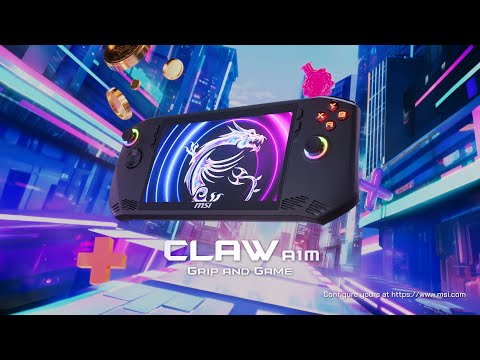
MSI Claw Launched To Rival Steam Deck And ASUS ROG Ally

At CES 2024, MSI unveiled its latest handheld gaming device, the MSI Claw, positioned as an innovative addition to the growing family of compact PC gaming devices. Sporting an Intel Core Ultra processor with the latest Intel Arc integrated graphics, it distinguishes itself as the first Meteor Lake-powered model in this category.

Designed with portability in mind, the MSI Claw features built-in grips and game controls surrounding a 7-inch screen tailored for on-the-go gaming. Drawing inspiration from the Valve Steam Deck and the Asus ROG Ally, MSI has incorporated SoCs ranging from the Intel Core Ultra 5 135H CPU to the top configuration’s Core Ultra 7 155H.

Weighing relatively less than its counterparts, the Claw addresses potential overheating concerns with a well-ventilated chassis, leveraging dual cooling fans. The 7-inch display boasts a full HD resolution with touch input and a game-friendly 120Hz refresh rate, catering to older or less demanding games typical for handheld systems.

In terms of battery life, the Claw comes equipped with a 53Wh battery, claiming a promising two hours of gameplay under heavy load.

Functioning as a Windows 11 PC, it utilizes the MSI Center M interface for a touch-friendly menu, supporting popular game store options such as Steam, Xbox Game Pass, Ubisoft, EA, and Epic.

Connectivity

The device offers connectivity options, including a Thunderbolt 4 port, MicroSD card slot, audio combination headset jack, and a fingerprint sensor integrated into the power button for secure logins.

MSI plans to provide a desktop stand, functioning as a Thunderbolt hub, enabling charging and offering a full-size HDMI port and USB connections. This allows users to transform the handheld into a desktop experience with external displays, keyboards, and mice.

Availability and Price

The MSI Claw will be available in various configurations, with the base model starting at $699 featuring an Intel Core Ultra 5 135H CPU and 512GB of SSD storage. A more powerful Intel Core Ultra 7 model will also be offered at $749 (512GB) or $799 (1TB SSD). While a firm retail availability date is yet to be announced, representatives suggest it will be in the coming months.

MSI Claw Launched To Rival Steam Deck And ASUS ROG Ally , original content from Ubergizmo. Read our Copyrights and terms of use.

from Ubergizmo https://ift.tt/zDKXGEB